5 Tips to Choose the Best Yarn for Baby Blankets
Choosing the best yarn for baby blankets doesn’t have to be overwhelming. Use these 5 tips to create a soft, safe, and durable blanket baby will love.
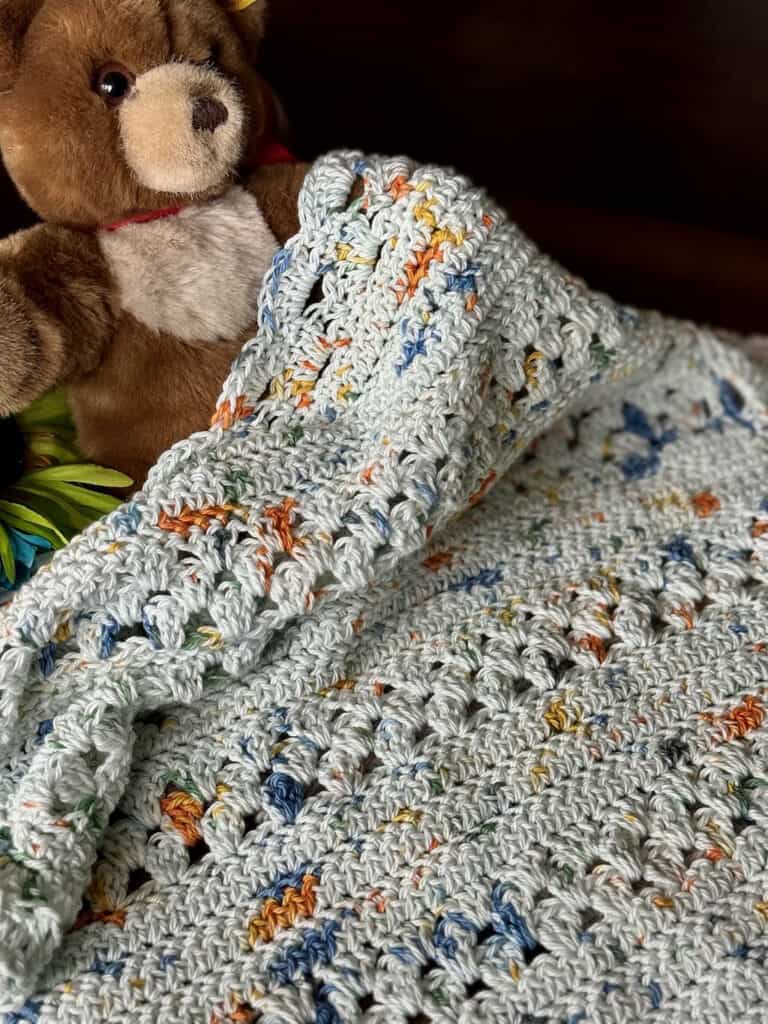
Crochet baby blankets are among the most popular and thoughtful gifts for the nursery, cherished by little ones and parents alike. But if you’re going to put in the time and love to make one, you want to be sure it actually gets used.
Choosing the wrong yarn can mean a beautiful blanket that ends up sitting on a shelf, so getting it right really matters.
To help you find the best yarn for baby blankets, I’ve put together 5 tips that will guide you toward a finished project that’s loved for years to come.
How to Choose the Best Yarn for Baby Blankets
My 5 top tips for choosing the best yarn for baby blankets
- Choose pure plant fibers or blends with acrylic.
- Make sure the yarn is hypoallergenic and safe for babies.
- The yarn should be durable through tough wear and tear.
- Keep the yarn and stitches lightweight and breathable.
- The baby blanket should be easy to maintain and care for.
Let’s take a look!
Choose the right fiber.
Not all yarn fibers are appropriate for a baby’s delicate skin. If you’ve ever pulled on a sweater and started itching within minutes, you know exactly what I mean.
Your skin was reacting to the fiber, and baby’s skin is even more sensitive than yours. That’s why fiber content should be one of the first things you consider when choosing the best yarn for baby blankets.
As a general rule, avoid animal fibers like wool or alpaca, since there’s a good chance they’ll irritate a newborn’s skin. Instead, stick to plant-based or synthetic fibers.
Cotton is my top pick. It’s soft, breathable, widely available, and budget-friendly. Bamboo is another lovely option, especially when blended with cotton or acrylic, though it does tend to come with a higher price tag.
Speaking of acrylic, don’t overlook it. A quality acrylic or acrylic blend can be wonderfully soft, easy to care for, and gentle on sensitive skin.
When in doubt, let softness be your guide: if it feels good against your cheek, it’s likely safe and comfortable for baby too.
The yarn should be hypoallergenic and safe for babies.
If you’ve already decided on a plant-based fiber, you’re off to a great start. Plant fibers are naturally hypoallergenic, which makes them an inherently safer choice for a baby’s sensitive skin.
But if you want an extra layer of confidence, there’s one label worth knowing about: OEKO-TEX®.
The OEKO-TEX® STANDARD 100 is a globally recognized, independent certification system that tests textile products, including yarn, to ensure they’re free from harmful substances. Yarns that pass this rigorous testing process are permitted to display the OEKO-TEX® label, making it easy to spot a safer choice right on the skein.
Not every yarn brand submits to this testing, but that doesn’t mean you’re out of options. A quick visit to the manufacturer’s website can tell you a lot about their safety standards and testing practices.
When it comes to choosing the best yarn for baby blankets, knowing exactly what’s in your yarn gives you — and the parents — real peace of mind.

Look for yarn that’s durable through tough wear and tear.
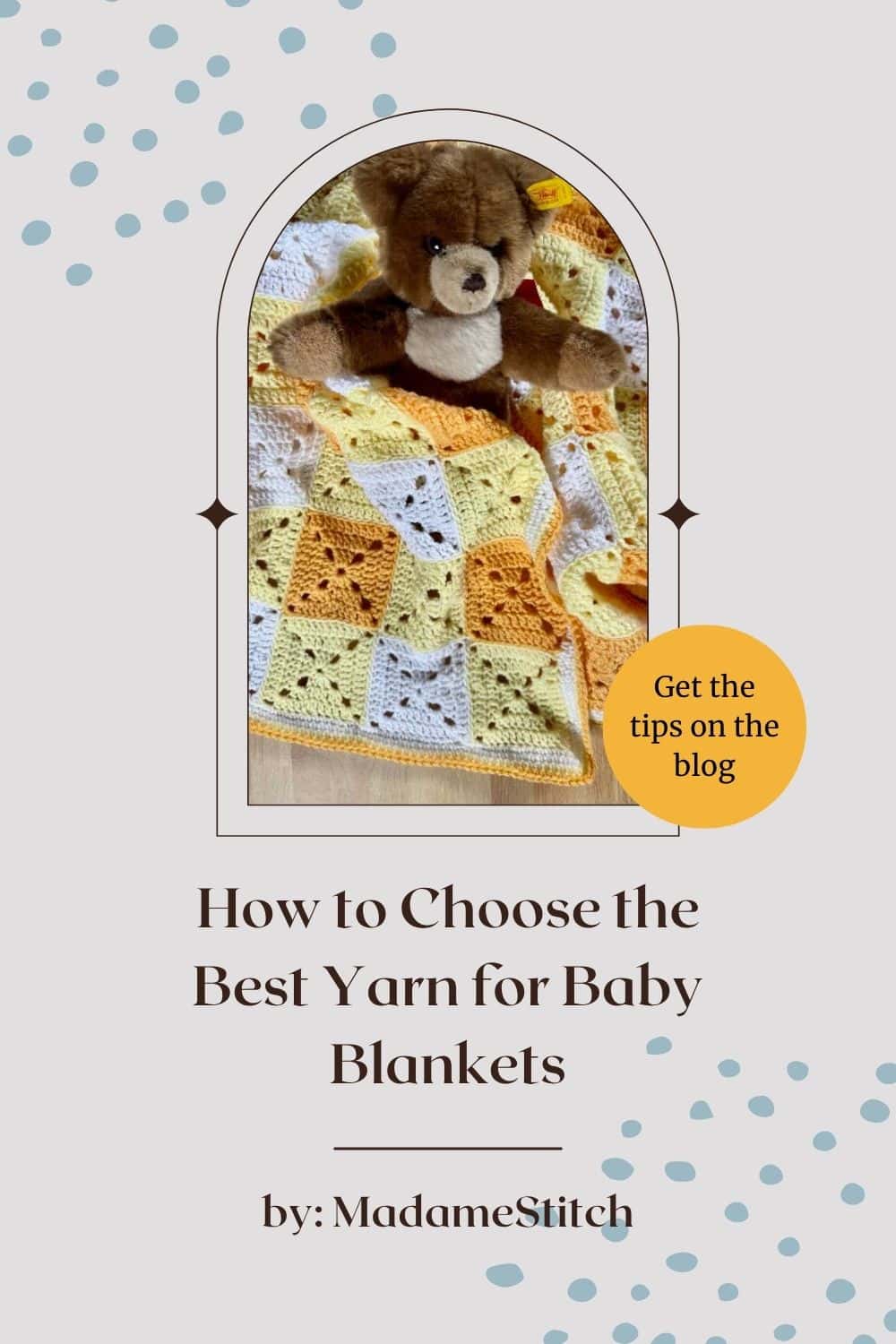
A crochet baby blanket is made to be loved, dragged around, snuggled with, and washed more times than you can count. Babies are notoriously hard on everything they use, and honestly, that’s exactly what we want. A blanket that gets used is a blanket that’s treasured.
That’s why durability should be high on your list when searching for the best yarn for baby blankets. Durable yarn starts with strong fiber content. As we covered in the first tip, cotton and cotton blends are an excellent choice here.
Beyond fiber, look for yarns with a tight, multi-ply construction, which means multiple strands are twisted together for added strength and longevity.
It’s also worth seeking out anti-pilling yarns, which are specially engineered to prevent those pesky little fuzzballs that form after repeated washing. High-quality acrylics often excel in this area, making them a smart pick for a blanket that needs to hold up over time.
The best baby blankets aren’t the ones that look perfect on a shelf. They’re the ones that still look great after years of being baby’s favorite thing in the world.
Keep the yarn and stitches lightweight and breathable.
Unlike older children and adults, newborns haven’t yet developed the ability to regulate their own body temperature which means the blanket you make plays a bigger role in their comfort than you might think. Keeping your yarn and stitch choices lightweight and breathable isn’t just a design preference; it’s an important safety consideration.
When it comes to stitch selection, avoid heavily textured patterns that result in a dense, heavy fabric. At the same time, be mindful of stitch patterns that create large holes, which can pose a tangling risk for little fingers and toes.
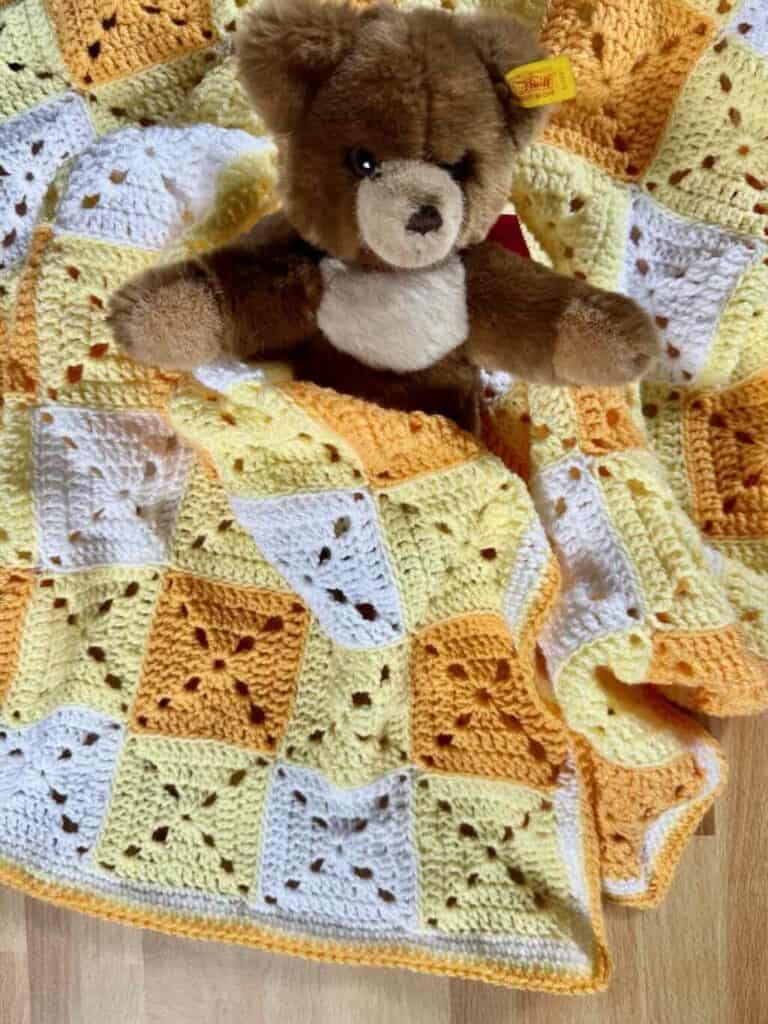
Granny squares that incorporate some closed stitching within the squares and along the border strike a wonderful balance. They allow for airflow while still keeping the fabric structured and safe.
As for yarn weight, DK and worsted weight yarns hit the sweet spot for baby blankets. They’re substantial enough to work with comfortably, yet light enough to keep baby from overheating.
In fact, when paired with the fiber contents we’ve already discussed, DK and worsted weight yarns consistently produce the best yarn for baby blankets in terms of both safety and drape.
The right combination of yarn weight and stitch pattern means baby stays cozy and comfortable without ever getting too warm.
The finished blanket should be easy to care for.
No parent is looking for more tasks to add to their already packed schedule, and special-care items are nobody’s friend when there’s a baby in the house.
If you want your handmade blanket to be reached for again and again, rather than tucked away in a drawer to avoid the hassle, choose a yarn that can be tossed in the washer and dryer without a second thought.
The good news is that the fiber choices we’ve already talked about – cotton, cotton blends, and quality acrylics – are generally very easy to care for.
But if you want to be absolutely sure before you commit to a full blanket, do a quick swatch test. Crochet a small sample with your chosen yarn, run it through a regular wash and dry cycle, and see how it holds up.
Does it pill? Shrink? Lose its softness? You’ll have your answer quickly, and you’ll save yourself the disappointment of finishing a beautiful blanket only to find it can’t handle everyday laundry.
A blanket that’s easy to care for is a blanket that stays in rotation. And that’s the best gift you can give a busy, grateful parent.
Let’s bring it all home!
With so many yarn choices out there, it can feel overwhelming to know where to start. But it doesn’t have to be.
The best yarn for baby blankets comes down to a handful of thoughtful considerations: the right fiber, hypoallergenic and safety certifications, durability, lightweight breathability, and easy care.
Keep those five things in mind, and you’ll be well on your way to making something truly special.
Because at the end of the day, a handmade baby blanket isn’t just a gift. It’s meant to be baby’s prized companion, dragged everywhere and loved hard. With these 5 tips in your back pocket, you have everything you need to choose the perfect yarn and create a baby blanket that’s cherished, used, and never once hidden away in a drawer.
Now go find that perfect yarn — a little one is waiting for their new favorite blanket.
Additional Resources
These are just my 5 top tips to help you choose the best yarn for baby blankets. Check out these other designers’ posts:
- 11 Top Yarn Choices for Crochet Blankets by Daisy Cottage Designs
- How to choose the right yarn for a baby blanket by LoveCrafts
- Best Yarn for Baby Blankets by love life yarn
Choose the perfect yarn for these baby blankets